
An essay
Why Missouri is the Trail State
Missouri is officially the Show Me State. The Trail State is an argument, and the people who built the trail make it here, mostly in their own words.
The Trail State · September 2026 · About 15 minutes
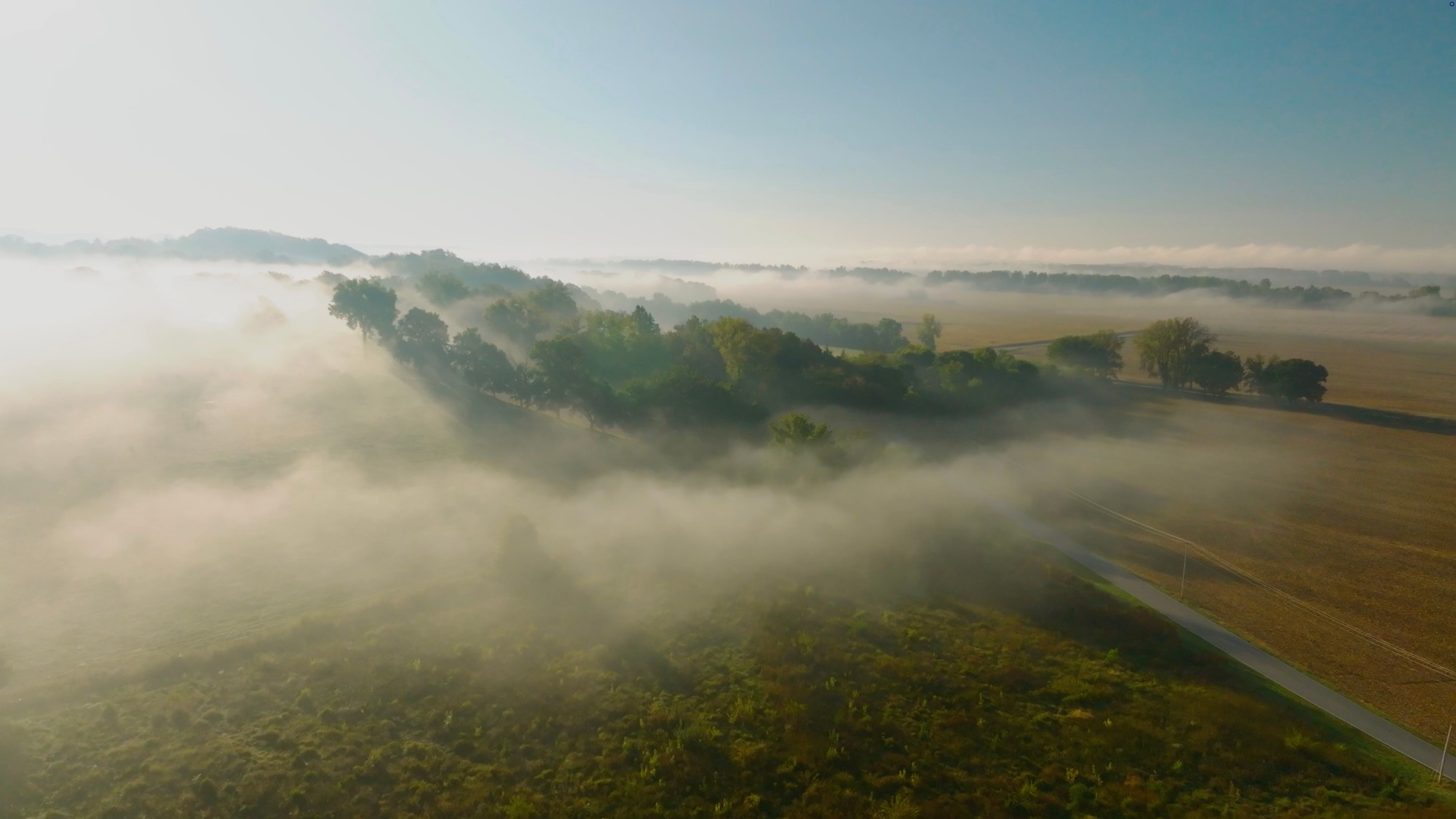
IWhere the name came from
When we started this film we did not have a title. Somewhere in the first weeks of research a phrase turned up: American Trails, a national nonprofit, had named Missouri its Best Trails State for 2013, an award it gives every two years to the state that has done the most for its trails. Terrain Magazine ran the story in January 2014, and then the phrase mostly went quiet. Brad Kovach, who published that piece and sat for this film twelve years later, remembered it as one of the first things Terrain ever posted. We had never heard Missouri called the Trail State. Every web address and every social handle for it was still free. So we took it.
The Show Me State is the official nickname and will stay that way. The Cave State is well earned. But Trail State is the one this film is willing to argue for, because the argument turns out to be unusually good.
IIThe country left from here
Joel Rhodes, who directs the State Historical Society of Missouri, put it plainly when we asked whether the name meant anything to him. Missouri has always been the trail state, he said, and since long before European contact. The state has flown three flags, French, Spanish and American, and each of them built its roads on routes that Native nations had used for centuries. In the years around statehood, going west meant coming up the Missouri River as far as a boat could carry you and walking from there: first from Arrow Rock, later from Independence, the jumping-off point sliding west as the boats got better.
That is where the country's great overland routes begin. In 1821 William Becknell left Franklin, in the Boonslick, with a wagonload of trade goods and opened the Santa Fe Trail. Independence is the official starting point of the Oregon Trail by act of Congress. The California Trail outfitted at Independence and St. Joseph, and from St. Joseph the Pony Express set out for Sacramento. Four routes that redrew the map of the United States, and all four begin in the same state, on the same river.
IIIA Katy town
Then the railroads did to the trails what the interstates would later do to the railroads. Rhodes describes the 1850s lines as small, isolated and built to gauges that could not connect, and the 1880s and 1890s as the golden age, when feeder lines stitched the trunk routes together. Jay Gould, the Gilded Age's most notorious railroad man, controlled the Katy for a while. In 1883 the railroads standardized time. Before that every Missouri town set its own clock, and there could be sixty different times in the state at once.
The Missouri, Kansas and Texas came to the north bank of the river late, Dan Burkhardt told us, because the Union Pacific had taken the south bank first and there were no bridges. Between 1860 and 1896, through bankruptcies and reorganizations, the Katy found its financing, bridged the river at Boonville on a span that still stands, and ran flat and smooth along the north bank to St. Charles. The stretch opened in 1896. Its stops sat five to seven miles apart, which was as far as a farmer could haul grain to an elevator, and every one of them became a town: bars, hotels, livery stables, later garages. A fast freight called the Million Dollar Merchandise came through every night loaded for the Gulf. The Katy Flyer could get you from Texas to St. Louis in 26 hours, which Burkhardt compares to flying the Concorde.
What a railroad meant to a small town, Rhodes says, was three things at once: population, an economy, and an identity. We're a Katy town. The men who built it were mostly Irish and African American, the crews who cut the timber and raised the roadbed, the tie hacks a mile behind them, and behind them the gandy dancers, who lifted the rails with tongs and chanted to keep time. Rhodes is fifth-generation Irish with three generations of railroaders behind him and says he thinks of them at every rock cut on the trail. The depots, he says, were more than a place to buy a ticket. They were almost cathedrals.
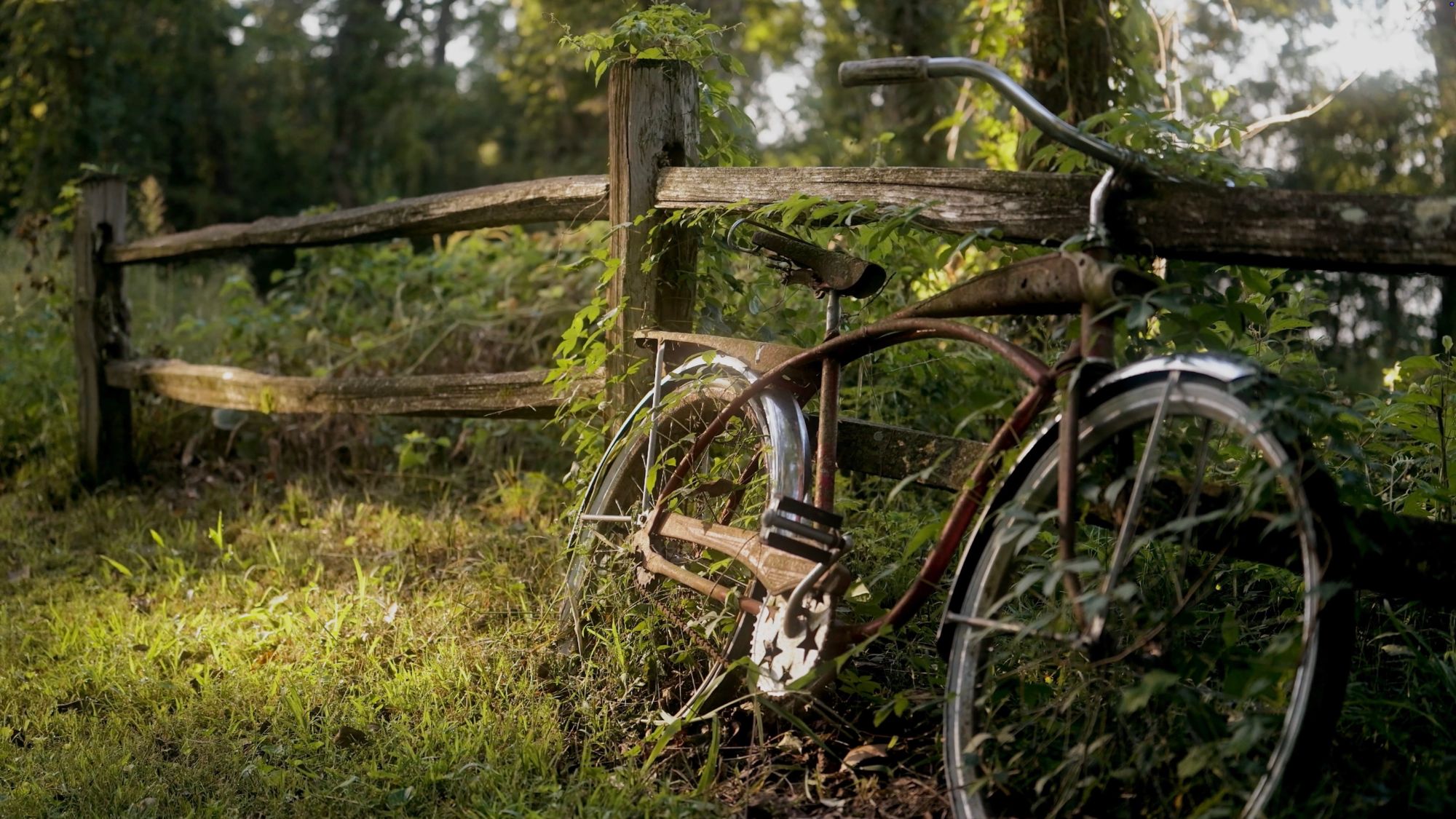
The railroads' best decade should have been the 1950s. They had switched to diesel and streamlined the passenger trains. But diesel meant they no longer stopped for water and coal, so the small towns that existed to service steam lost their reason to exist, and the interstate and the family car took the passengers. By the late 1960s passenger service was gone, the lines had consolidated into a few freight haulers, and towns like Blackwater, which had been railroad towns for two generations, were simply passed through. A town that lost its rail connection, Rhodes says, lost its population growth, its economic development and its sense of identity, all together.
IVThe check and the lawsuit
On October 4, 1986, the Missouri River flooded and tore up the Katy's track between Sedalia and Machens. The line had been losing money for years. The railroad chose not to rebuild it, and after ninety years on the north bank the Katy was finished.
Three years earlier, in 1983, Congress had amended the National Trails System Act to allow something called railbanking: a dead corridor could be held intact for possible future rail use and, in the meantime, used as a trail. Missouri was one of the first states to try it. What the law did not provide was money.
Ted Jones did. He was the son of the founder of Edward Jones and the man who turned it into a firm built on small towns, and he had already survived one round of cancer when the idea took hold of him in 1985. The cancer came back and stayed for the whole fight. Burkhardt, who worked for him then, says that when the chance came in 1986 Ted did not raise money from anyone. He wrote a check for two million dollars of his own and said: this is the chance of a lifetime, I'm going to buy this today before it's too late. David Kelly, who spent 36 years with Missouri State Parks and retired as its director, gives the arithmetic. The Joneses helped the state buy the corridor for $200,000, then gave $2 million to build two pilot sections and prove it could work.
Ted was not a cyclist. Burkhardt is clear about that, and says he and his wife Connie manage about three miles a year, from the Peers Store to Treloar. Ted and Pat had ridden a rail-trail in Wisconsin and come home with an idea about what a corridor like this could do for a state that has, in Burkhardt's phrase, no seacoast, no mountains and no beaches.
Nobody is going to visit Tebbetts, Missouri, or Treloar, or Hartsburg, just to see those places. But if you can tell people those places are connected by the longest rail trail in America, following America's longest river across an entire state, people will come.
Dan Burkhardt, on what Ted Jones saw
The corridor ran through other people's farms, and a great many of them assumed that when the railroad left, the land would come back to them. Maurice and Jayne Glosemeyer farmed in Warren County. The Katy had split their house from their hog operation, and the deed their family held from the 1890s granted the railroad an easement "for a railroad, and for no other purposes." When the tracks came up they thought that was the end of it. Jayne learned from a newspaper clipping, three years later, that the state intended a public trail across their land.
They sued. The Glosemeyers led a class action on behalf of more than 1,100 landowners along the corridor, backed by the Missouri Farm Bureau, arguing that the state had taken their property without paying for it. Gary Heldt, who ran the grain elevator at Rhineland, organized the farmers, and the stretch from Rhineland to Marthasville became the center of the opposition. It got ugly. There was hate mail and there were anonymous calls, and one morning Maurice found his tractor tires slashed.
The Eighth Circuit ruled against the landowners in 1989. On February 21, 1990, in a Vermont case that settled Missouri's, the United States Supreme Court upheld railbanking nine to nothing. Kelly remembers the day. The parks manager for the Katy was out in the field somewhere without a phone, and they had to find him and get him back to Jefferson City, because it was go.
The landowners were not finished. In 2000 the Court of Federal Claims agreed that turning a railroad easement into a hiking trail was a taking of private property, since recreational hiking, jogging and cycling are not connected with railroad use in any meaningful way, and that the government owed compensation for it. The trail stayed, and the question of what was owed ran on for years afterward. Jayne Glosemeyer's objection was never really to bicycles. "This wasn't even an eminent domain thing," she said. "Eminent domain at least makes sure you get compensated." Heldt, asked about it in 2019, said he still had feelings about how it went. That is part of this story too, and the film does not pretend otherwise.
VA cold morning in Rocheport
Kelly was a young State Parks employee on April 28, 1990, a cold spring morning in Rocheport, when the first section opened. Governor John Ashcroft cut the ribbon. More than a thousand people came. Ted Jones was too sick to walk the trail, so Kelly drove him and Pat down it in a golf cart. Ted died that October, five years after the idea and six months after the ribbon, having seen a few miles of it open in the middle of the state.
Pat picked it up and carried it for 28 years. She had been the first woman to graduate from the University of Missouri's School of Agriculture, and Kelly says that most of what State Parks now does to get people onto the trail who cannot ride it, the fall tram tours for seniors especially, came out of conversations with her. She gave the family farm at Williamsburg to the state as a conservation area in 1997 and kept turning up at trail events until she died in 2018. People called her the mother of the Katy Trail.
The trail did not arrive all at once. Union Pacific donated the 33 miles from Sedalia to Clinton in 1991. The great flood of 1993 put 75 of the trail's first 126 miles underwater, and 1995 flooded it again. The stretch from St. Charles to Sedalia was finished in 1996, Sedalia to Clinton in 1999, and the last piece east to Machens in 2011. Brett Dufur, who has written the Katy Trail guidebook since 1995 and has just sent the twelfth edition to the printer, says the honeymoon never ended.
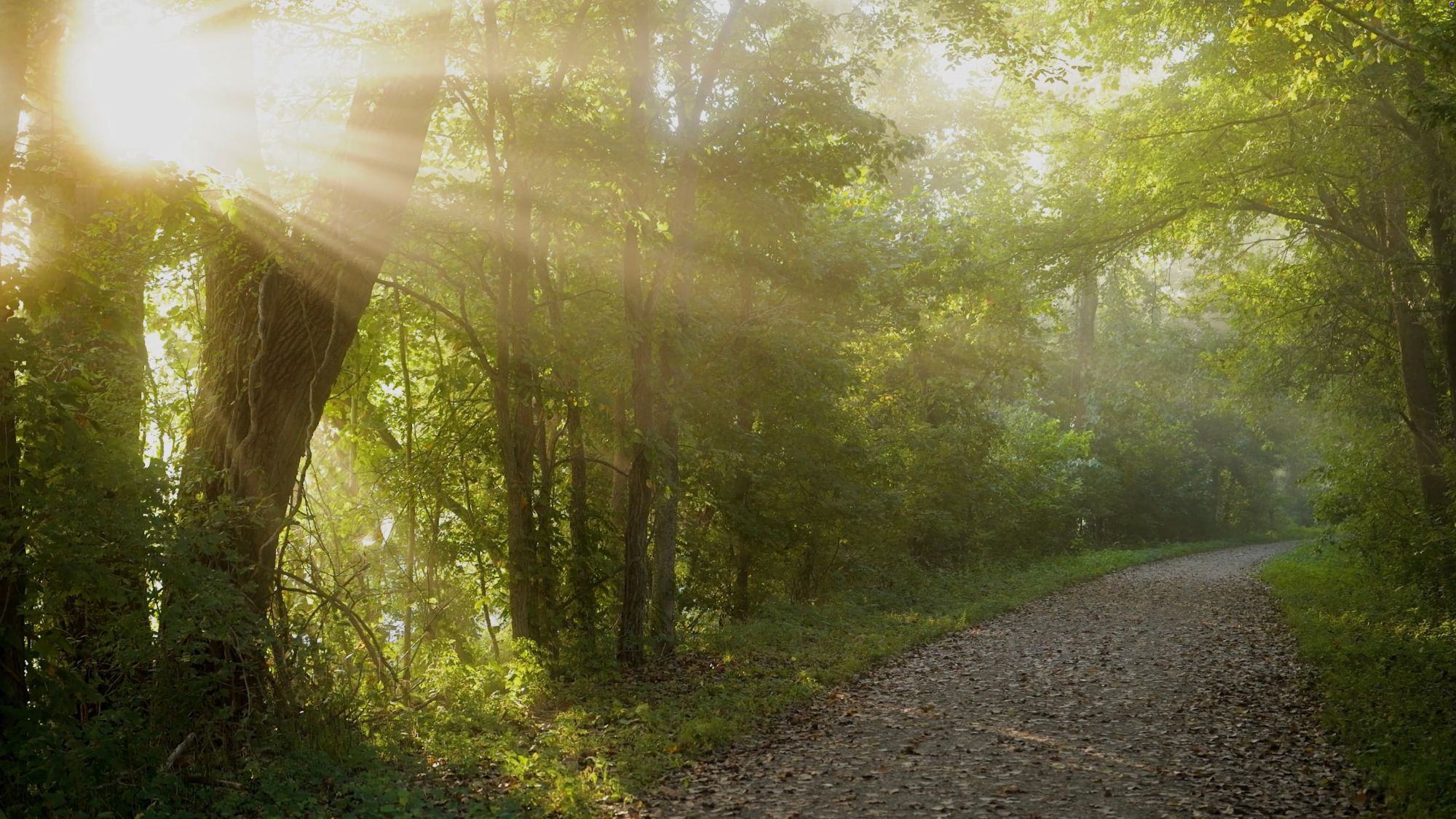
Some of the people who fought it changed their minds. One of Kelly's earliest memories from Hartsburg is a pickup with a Stop the Katy Trail sticker on the tailgate and the kids' bicycles in the bed. Harold Wintermeyer, a Hartsburg farmer in his seventies who had opposed the trail, got his bike out with his wife once it opened and rode every evening with their neighbors Paul and Irene Nichols. Kelly interviewed him for a State Parks film in 1992. He had been all over the world in the Navy, he said, and there was not a prettier place in it than the bend in the river behind his house where the sun goes down on the water. His doctor told him he did not know what Harold was doing, but to keep doing it.
VIWhat it is worth
The Katy is a state park one hundred feet wide and two hundred and forty miles long, run in four pieces by four other state parks. It has 26 trailheads. It is the longest developed rail-trail in the country, the second ever inducted into the Rail-Trail Hall of Fame, and the longest stretch you can travel without a motor on both the American Discovery Trail and the Lewis and Clark National Historic Trail, with 185 miles right beside the river. Lewis and Clark camped along it in 1804. Daniel Boone was living at Marthasville when they passed. The pictographs on the bluff near Rocheport that they wrote about in their journals are still there. Missouri is one of only seven states where the parks are free, paid for by a sales tax of one tenth of one percent that voters have to renew every ten years. In 2016 they renewed it with 80.3 percent. On August 4, 2026, they renewed it again with 82.3 percent, and it carried every county in the state.
What the trail does to a town is measurable now. The University of Missouri surveyed Katy Trail visitors for State Parks in the last three months of 2025 and published the results this May. Visitors spent $24.6 million on the trail in 2025. Counting the ripples, that supported nearly 300 jobs, $13 million in wages, and $39 million in sales to Missouri businesses. A day visitor spends about $46, most of it in restaurants. Somebody staying overnight spends $148. When the survey asked Missourians what they wanted next, the most common answer, unprompted, was to finish the Rock Island Trail.
The numbers have faces. Hartsburg has 108 people and a pumpkin festival, started the year after the trail opened, that draws twenty-five to thirty thousand a day. Tebbetts is a farm town where a woman named Mrs. Turner left her old general store to the Conservation Federation of Missouri, which turned it into a hostel with bunk beds, and where a local family will meet you at the trailhead with a hot meal if you call ahead. We did a quick head count at the Treloar Bar and Grill one afternoon: half the customers had come off the trail and half were local, and the locals have a bar because of the half who rode in. Dufur calls the trail Missouri's longest welcome mat. Burkhardt points out that a ten-foot-wide strip can hold thousands of riders at once and give every one of them the feeling of being alone.
I've been all over the world. I was in the Navy. And there's not a prettier place in the world than this spot right behind me.
Harold Wintermeyer, Hartsburg, as David Kelly remembers it
VIIThe Rock Island
Bruce Sassman represents District 61 in the Missouri House. He grew up in a Rock Island railroad town, the kid who jumped boxcars and laid pennies on the rail, and he watched the town shrivel when the trains stopped. On December 14, 2021, Ameren's Missouri Central Railroad gave the state 144 miles of the old Chicago, Rock Island and Pacific corridor, Windsor to Beaufort, at no cost, and it became the 93rd unit of the park system. Joined to the 47 miles already open from Windsor to Pleasant Hill, and to the Katy at both ends, it makes a loop of about 450 miles from the parking lot at Arrowhead Stadium to the Arch. Sassman calls it the Heart of Missouri loop, and points out that nowhere else in the world has one, and Missouri does not have to share it.
It is not the Katy again. The Rock Island crosses the Ozark hills, with four tunnels, one of them 1,661 feet long against the Katy's 243, and a bridge over the Gasconade River 1,700 feet long and a hundred feet up with no side rails. Kelly says it looks like something out west.
The money came within one vote. A few years ago the governor asked the legislature for $69.3 million to build it out. The House passed it. In the Senate a single member blocked it, and the funding was gone. The film does not name the senator, and neither will this page. What has happened since is what happened on the Katy forty years ago: with no state money, the towns are building it themselves. Gerald has built a mile. Owensville has built three. Gasconade County is connecting three more. Every day, Sassman says, there are a few feet of trail being built, slower than he would like.
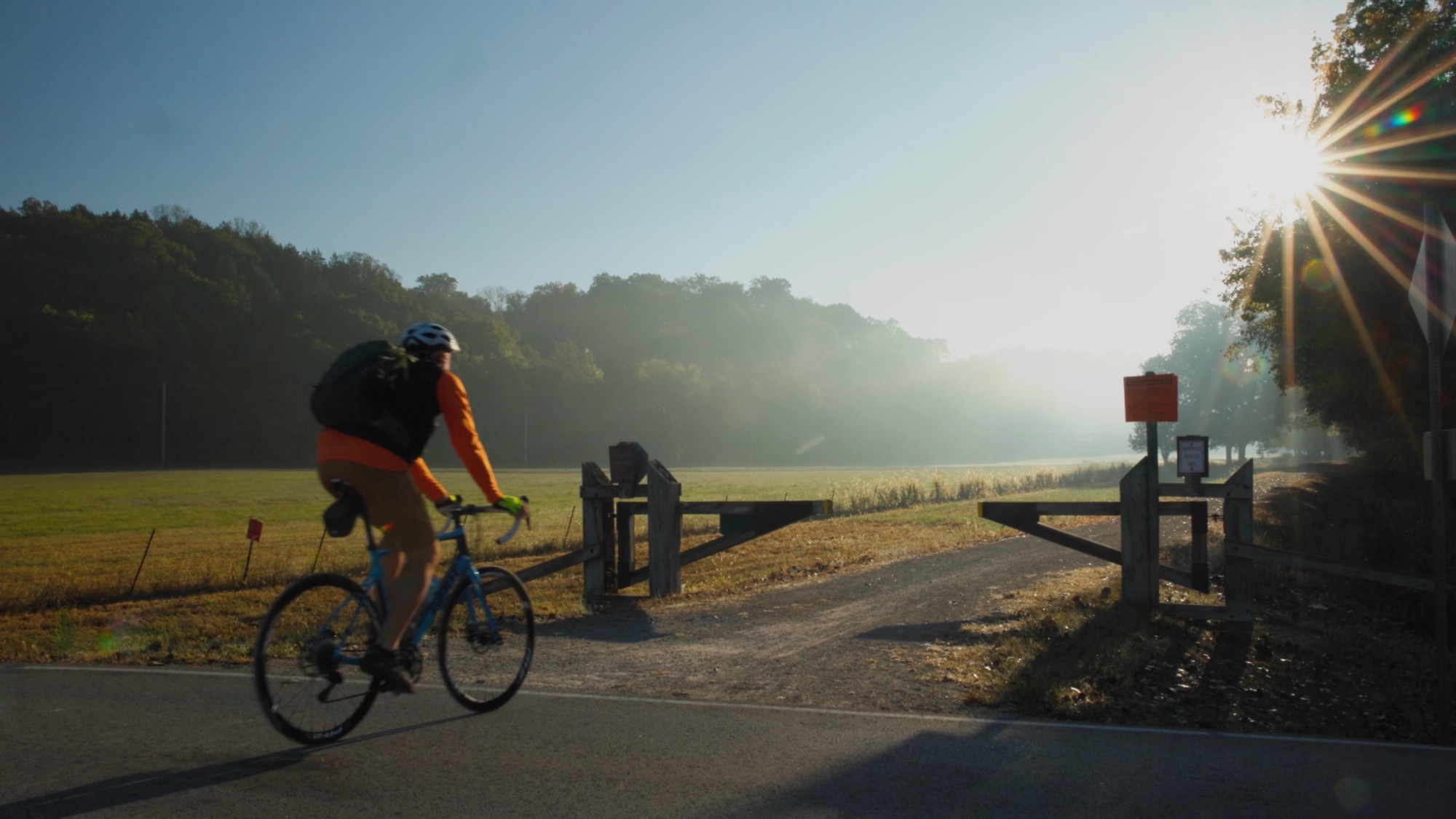
"It may be a trail instead of a train," Sassman told us, "but it's a rebirth nonetheless." Burkhardt puts it in five words: where trails are built, hope follows. His wife Connie, who has watched the funding come and go, said the sharp thing. The Trail State is a mantle now, she told us, and other states are spending real money to take it. We cannot sit around and declare ourselves the Trail State and not keep moving.
On September 17, 2026, Governor Mike Kehoe signed a proclamation naming September 22 as Trail State Day in Missouri, which was the day the film premiered at the Missouri History Museum. It is a piece of paper, and the people in this film would be the first to say a piece of paper is not the point. Rhodes, asked what the phrase meant to him, did not mention bicycles. The Trail State, he said, is the movement of people through Missouri, for centuries: Native nations, French, Spanish, Americans of every kind, Germans and Irish and Italians, and a good many of those trails ended here and stayed for generations. This is a state that people have always set out from, and that has decided, more than once, not to sell the way out for scrap.